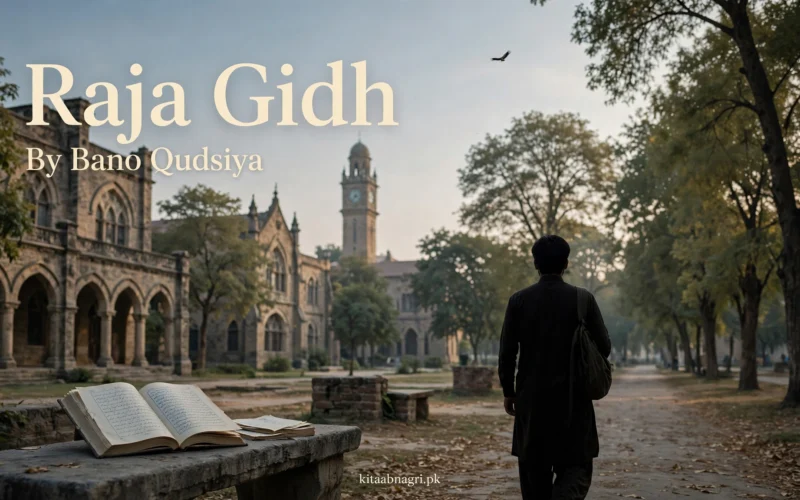
Raja Gidh Novel By Bano Qudsiya is a landmark Urdu novel first published in 1981. Issued by Sang-e-Meel, its title joins gidh, Urdu for vulture, with raja, meaning king. That king of vultures runs beside the human story, warning that this is no light romance. It is a searching novel about desire, limits, and crossing them at any cost.
| Novel Name | Raja Gidh |
| Writer | Bano Qudsiya |
| Language | Urdu |
| Category | Bold and Hot Based Novels |
| File Format |
Raja Gidh Novel By Bano Qudsiya Story Overview
Qayyum, from a rural background, narrates from his Lahore student days. In the MA Sociology class at Government College Lahore, he meets Seemi Shah, also written Seemin Shah. Modern, attractive, and from an upper middle class family, she draws most male class fellows, including Qayyum and young liberal professor Suhail. Yet she loves Aftab, from a Kashmiri business family.
Aftab loves her too, but cannot rise above family values. Under parental pressure, he marries against his wishes and leaves for London for the family business. Qayyum suffers unrequited love, while Seemi, deprived of love at home, had searched for it outside, pulling everyone into painful choices.
Beside this runs an allegorical vulture kingdom. Birds gather and judge, mirroring humans. The vulture, feeding mostly on carcasses, metaphors trespassing ethical limits set by society or religion. Birds declare man mad for nuclear weapons that could destroy his species, and move to banish vultures. A classroom romance becomes a question about human nature.
Main Characters
Qayyum
Qayyum is narrator and emotional centre. From a rural background marked by childhood trauma and the ruination of his village, he falls hopelessly in love with Seemi, knowing she loves Aftab. That hopeless love, with his curiosity and longing, pushes him toward self-destruction and, later, a hard journey of self-discovery.
Seemi Shah
Seemi Shah comes from an elite bureaucratic background with troubled relations with her parents. Deprived of love at home, she searches for it outside. Modern and aware of the attention she receives, she stays fixed on Aftab. Her untimely, sudden death leaves a deep mark on Qayyum and drives much of his later suffering.
Aftab
Aftab is Seemis beloved class fellow from a Kashmiri business family. He returns her love but surrenders to family pressure, accepts marriage against his wishes, and leaves for London. He is no villain; he shows how family duty and business can overpower personal feeling, and how one surrendered decision echoes through several lives.
Professor Suhail
Professor Suhail is the young liberal teacher in the same college circle who is also drawn toward Seemi. He gives the campus a more open, modern voice. His presence sharpens the contrast between tradition and liberal thought, showing how differently each man around Seemi responds to the same social rules.
Central Conflict
The surface conflict is simple: Qayyum wants Seemi, Seemi wants Aftab, and Aftab cannot defy his family. Private desire collides with public duty, so every feeling carries social cost. Beneath this triangle, Bano Qudsiya builds a deeper conflict.
That conflict concerns halal and haram, lawful and unlawful. Many readers read the novel as arguing that pursuing haram, financial, moral, or emotional, deteriorates normality and may pass abnormality to the next generation. The plot supports that thesis, and the vulture kingdom gives it a symbolic second stage.
Madness, deewangi, is a third conflict. Unrequited love, curiosity, rizq-e-haram, and awareness of death can drive the mind into a whirlpool. After Seemis death, Qayyum endures these pressures, giving the abstract argument a human face.
Themes and Writing Style
Halal and haram govern everything. Lawful earning, desire, and conduct stand against shortcuts and forbidden gains. Campus story and bird allegory press one question: what do unlawful choices do to mind, family, and future?
Madness follows. Birds call humans mad for weapons erasing their own species, while characters show quieter madness in love, greed, and curiosity. Nostalgia softens this: Government College Lahore and Lawrence Garden recall seventies and eighties campus days Pakistani readers recognise.
Bano Qudsiyas style is deliberate, from a writer who thinks many times before a sentence, yet flow never stalls. Characters are not black and white, and Pakistani college readers often find themselves in one of them.
Who May Enjoy This Novel
Choose it for classic Urdu fiction that argues with you: faith, morality, and Lahore student life. Literature students will value why a 1981 novel still gains new editions almost yearly.
It may not suit seekers of light, happy romance. The love is painful, the thesis strong and debatable, and the allegory asks patience. Read it to think, argue, and remember, not merely finish.
New readers often approach it slowly, pausing after the bird gatherings to connect symbol with scene. That pace suits its design, because argument and story advance together. Discussion groups value the same quality, returning to Qayyums choices, Seemis search, and Aftabs surrender with sharply different judgments, which keeps this decades old campus novel feeling unsettled, present, and alive today for many thoughtful readers everywhere now.
Related Novels You May Like
If this spiritual searching stays with you, Peer e Kamil Novel By Umera Ahmed follows two lost young people toward guidance, faith, and redemption over many years.
Readers moved by emptiness and new beginnings will value Alif Novel By Umera Ahmed, where a filmmaker and an actress face faith, family wounds, and second chances.
For love tested by power, corruption, and damaged families, try Amar Bail Novel By Umera Ahmed, an emotional novel of sacrifice inside Pakistans civil service world.
If you prefer a shorter story of doubt and faith, Hasil Novel By Umera Ahmed follows a restless young man changed by a steadfast young womans belief.
And for a moral tale of poverty and unlawful shortcuts, Man o Salwa Novel By Umera Ahmed asks what honestly earned livelihood means under hunger and pressure.
Reader Questions and Final Thoughts
FAQs
Who wrote Raja Gidh?
Bano Qudsiya, also spelled Bano Qudsia, wrote it. Known as Bano Aapa, she was a Pakistani novelist and playwright, and this remains her most recognised work.
When was Raja Gidh first published?
It was first published in 1981 by Sang-e-Meel in Pakistan. Its popularity has endured, with new editions reported almost every year since publication.
What does the title Raja Gidh mean?
Gidh means vulture and raja means king, so the title means king of vultures. It names the allegorical vulture kingdom running parallel to the human plot.
Who are the main characters in Raja Gidh?
Qayyum the narrator, Seemi Shah, her beloved Aftab, and Professor Suhail form the main circle at Government College Lahore, carrying its love, loss, and moral conflict.
Is Raja Gidh only a love story?
No. Love begins it, but the novel centres on halal and haram, madness, unlawful earning, and ethical limits, turning romance into philosophical argument.
Final Words
Raja Gidh endures because it refuses to stay small. A classroom love story opens into debate about unlawful desire, inherited damage, and birds judging human madness. Even readers who resist Bano Qudsiyas thesis remember Qayyums longing and Seemis loss. Approach it as a serious classic, and its questions will stay long after the final page.
2 comments