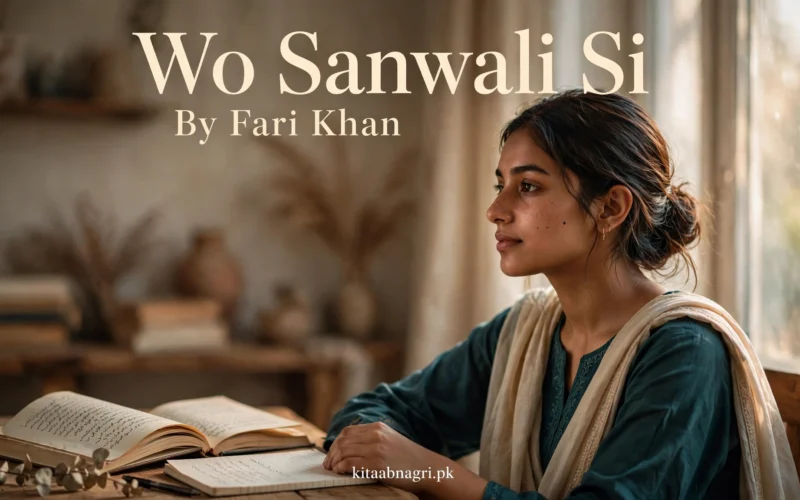
Wo Sanwali Si Novel By Fari Khan is an Urdu romantic novel that confronts a cruel habit: judging a girl by her skin color. The title means “That Dusky Girl,” and it follows a dark-complexioned young woman mocked, compared, and pushed aside for something she never chose. Instead of surrendering, she answers cruelty with education, patience, and a quiet refusal to believe she is less. Fari Khan, who narrates her own stories in audio form on YouTube, wrote this novel as a message of dignity for every reader made to feel inferior for how they look.
| Novel Name | Wo Sanwali Si |
| Writer | Fari Khan |
| Language | Urdu |
| Category | Urdu Romantic Novels |
| File Format | Not confirmed |
Wo Sanwali Si Novel By Fari Khan Story Overview
Inside a busy joint family, cousins grow up side by side and every girl is measured against the others. From childhood, the heroine hears the same jokes about her dusky complexion. Relatives compare her with fairer cousins, neighbors pass remarks, and some family members treat her as less worthy.
Unbroken by mockery, she turns to the one weapon nobody can take: her mind. She studies harder than those around her and carries a dignity that surprises everyone. Her worth, she decides, will not be voted on at any family gathering.
Love brings the story’s deepest wound: the man she loves chooses another girl, and the reason is no secret, her skin color. That rejection cuts deeper than family jokes because it feels personal. The novel does not rush her grief; she weeps, and nearly stops believing she deserves love.
Then a different man enters her world, educated, serious, and kind-hearted. He notices what others missed: her intelligence, sincerity, and strength. He does not pity her; he sees her whole. Slowly, those who mocked her begin to admire her, and the novel closes with dignity winning over prejudice.
Main Characters
The cast stays close to everyday life.
The Heroine
She is the dusky-complexioned girl at the center of the story, intelligent, self-reliant, and deeply loving. Mocked since childhood, she becomes determined instead of bitter. Her education is her armor, and her emotions are honest: she cries, breaks down, then stands up again with her dignity intact.
The Man Who Recognizes Her Worth
He is an educated, thoughtful man who values minds over faces. Where others see only the heroine’s complexion, he sees her character, patience, and sincerity. His kindness is not charity; it is genuine respect, showing love free from society’s beauty standards.
The Family and Relatives
The joint family mirrors society itself. Elders, aunts, and cousins repeat the casual cruelty of the outside world, ranking girls by fairness as if it measured value. Their slow change from mockery to admiration carries the novel’s message: prejudice is learned, and can be unlearned when character proves louder than color.
Central Conflict
The central conflict is not between two people but between a girl and an idea: that fair skin equals worth. At home it appears as jokes; in love as rejection, when the man she loves prefers a fairer face; in society as pressure telling a dark-complexioned girl to lower her expectations for marriage, respect, and happiness.
She fights on two fronts: outside, people who judge her; inside, the temptation to believe them. Her victories come when she chooses her own judgment over theirs.
Themes and Writing Style
Colorism sits at the heart of the novel. Fari Khan names a prejudice millions of South Asian girls grow up with: the obsession with fair skin that decides who is called beautiful and who is quietly passed over. By centering a dusky girl and refusing to “fix” her appearance, the novel argues the problem was never her face but the eyes judging it.
Inner beauty against outer beauty is the second great theme. The story shows that character, honesty, and kindness outlast every complexion. Self-respect runs beside it as a practical lesson: dignity is not given by others, it is kept by oneself, and education becomes the heroine’s path to independence.
Fari Khan writes in accessible, emotional Urdu, handling tears without melodrama. The episodic rhythm, shaped by its audio narration, gives each chapter a clear emotional beat, and the joint-family setting feels drawn from real homes.
Who May Enjoy This Novel
This novel belongs to every reader judged for their appearance, and to everyone who loves them. Young women who have heard remarks about their complexion will find a heroine who understands exactly how that feels, and fans of emotional Urdu social romances will appreciate how the love story serves the theme. It may not suit readers seeking a light, fast romance.
Related Novels You May Like
If inner beauty moved you, Sachy Moti Novel By Tehreem Arshad asks through a pearl: what makes a person truly precious when real beauty lives in the heart, not in outward appearance.
For another heroine searching for self-worth after unfair judgment, Usri Yusra Novel By Husna Hussain follows a wounded woman whose patience and dignity carry her through cruelty.
Readers who felt for a girl mocked by her own family will recognize Yaaram Novel By Sumaira Hameed, where a heroine called unlucky slowly learns to believe in herself.
If a heroine whose worth is never measured by appearance appeals to you, Hijab Novel By Amina Khan celebrates a young woman defined by dignity, faith, and love of education.
For the warm joint-family world and a heroine who keeps her dreams, Toota Hua Tara Novel By Sumaira Shareef Toor offers a long, emotional family saga of love and resilience.
Reader Questions and Final Thoughts
FAQs
What does the title “Wo Sanwali Si” mean?
“Sanwali” means a dusky or dark complexion in Urdu, so the title translates to “That Dusky Girl”: it names the heroine’s prejudice, turning the very word used to mock her into her story’s title.
Who is the heroine of the novel?
The heroine is a dusky-complexioned young woman from a joint family, judged for her skin color since childhood. Intelligent and educated, she proves character and dignity matter more than complexion.
Is Wo Sanwali Si a romantic novel?
Yes. A love story runs through it, including a painful rejection and a later relationship built on genuine respect, but the romance serves a larger message about beauty standards and self-worth.
What is the main message of the novel?
Real beauty lies in character, courage, and a pure heart, not in fair skin. The novel asks readers to stop ranking people by complexion and honor dignity in those society overlooks.
Where was Wo Sanwali Si first shared with readers?
Fari Khan narrates her own novels in episodic audio on her YouTube channel, and Wo Sanwali Si reached many readers through those episodes before circulating as a complete Urdu novel.
Final Words
Wo Sanwali Si stays with the reader because it speaks to a wound many carry quietly. In a heroine who refuses to let her complexion decide her worth, it offers a mirror and a comfort. Read it for its romance, and remember it for its courage: no one is less because of the skin they were born in.